
Guest Post By:

As children we were told that reading is important, and many of us are among the millions of library users, audible subscribers, and bookstore shoppers. But exactly why is it important and how do we convince kids of its inherent value? Well, like most things, there鈥檚 a fiscal angle here. According to听, 鈥渁dults whose annual household income is $30,000 or less are more likely than those living in households earning $75,000 or more a year to be non-book readers.鈥� In other words, reading is associated with a higher income.听
But, of course, it鈥檚 not only about the money. Reading is the gatekeeper of knowledge acquisition. Readers tend to be more empathetic humans because they view the world from multiple different perspectives thanks to the lens of fiction. Reading both fiction and non-fiction helps us become stronger communicators, better at speaking and writing. It鈥檚 only natural, therefore, to want to give our children an edge in life by encouraging them to read鈥搕o read well and read profusely. Here, we鈥檒l examine the many different benefits there are from reading and how to encourage kids of any age to read more.
What Are the Benefits of Reading?

Most of us know that reading offers many benefits, but it鈥檚 helpful to spell them out, especially if we鈥檙e faced with听. Who are reluctant readers? They鈥檙e the 27% of adults who haven鈥檛 read a book in the last year, a statistic that鈥檚 up, according to Pew, by 10% from a decade ago. Parents know that reading requires some self-discipline and patience; and, the truth is, it doesn鈥檛 always provide the instant gratification that streaming movies and video games do. But, the better we understand the benefits of reading, the more disciplined we can be about supporting our children鈥檚 healthy reading habits and encouraging them to spend time with books.听
Key Benefits of Reading:
Builds vocabulary:听children who read are likely to encounter more new words than non-readers. Reading supports vocabulary acquisition and helps kids to become more effective at expressing themselves in speech and writing.听
Supports communication and social skills:听as kids read, they pick up on sentence structure and multiple ways of expressing thoughts. This helps them to become more skilled at communication. Better communicators tend to navigate their social environment more effectively than people who struggle to communicate.
Promotes independence and self-confidence:听reading is a life skill. When children feel that they鈥檝e mastered this skill, they grow in self-confidence and are certainly more independent because they are aware that they have the skills to find answers to their questions.听
Enhances safety: can books make kids safer? When kids are reading books, they aren鈥檛 encountering content on YouTube or TikTok that is potentially harmful.听
Supports imagination:听reading words on a page allows kids to transport themselves to other places, other worlds, other mindsets with their imaginations running full steam ahead.
Entertains and engages the reader:听if you haven鈥檛 stayed up past your bedtime because you鈥檝e gotten lost in a great book, have you really lived your best life? We think not.听
Improves grammar skills:听Learning the mechanics of good writing isn鈥檛 fun. Somehow, when we learn these things through reading our favorite stories, it鈥檚 fun. We aren鈥檛 even aware that we鈥檙e learning these things!
Stimulates curiosity:听reading inspires new interests because it confronts us with topics we weren鈥檛 familiar with before. That spark of curiosity can set up on a path to life-long learning.
How to Encourage Your Children to Read at Home

The earlier we begin to encourage reading, the better, but it鈥檚 never too late to nurture a love for books in your kids. Although you know your child best, you can rely on some tried-and-true techniques among other parents and educators for encouraging your kid to read. Here are some ideas to try out:
Create a reading niche:听just because you can鈥檛 have Belle鈥檚 library (alas), you can still create a small library or cozy听听in your home. It might be a reading tent in a corner of your child鈥檚 bedroom or a window seat beside a shelf of good books. Have your child help with its design so they鈥檙e invested in its success.听
Set an example:听parents are the most successful teachers鈥揳nd kids learn our positive and negative behaviors. If they never see us reading, they鈥檙e unlikely to be convinced of reading鈥檚 fundamental importance to life鈥搕o real life, the life that adults are privy to.听听so they understand that you value it with actions, not just words.
Read to them when they鈥檙e young:听children enjoy listening to stories, and that builds developmental skills too. Read to them and then discuss the stories. You鈥檒l find that your chats will become treasured experiences you share together. Plus, when kids are interested in books when听, the more likely to find them interesting as they age.
Keep reading materials in your home: 鈥渘o kid who has parents who are interested in him and a houseful of books is poor.鈥� 鈥揝am Levinson. Enrich your kids鈥� lives by filling their bookshelves.听
Support kids鈥� reading interests:听听or adventure stories might not be your cup of tea, but it鈥檚 more important for kids to enjoy what they鈥檙e reading when they鈥檙e young than to instruct them to read classics or more cumbersome texts before they鈥檙e ready. Support their interests by visiting libraries and bookstores together to find their favorite types of books.
Enjoy audiobooks: audiobooks are easy on the eyes, and they offer many of the same听听as reading, but in listening form. Listen to audiobooks together when driving or doing household chores together.听
Read each day:听by making reading a part of the daily routine, you can help kids develop robust reading skills. Reading will become a positive habit for them, one they can carry into adulthood.
Reading and Post-Reading Activities

Parents and other 爆料公社 members can enhance the benefits kids can obtain by complementing reading with a few related activities. While you might think that school teachers have plenty of time for these types of activities, the truth is that there often isn鈥檛 time during the school day for kids to 鈥渓uxuriate鈥� over books and book activities. However, you can supplement what happens in the classroom with听听of your own such as these:
Illustrate text:听encourage your budding artist to create art for their favorite books. Have them design a book jacket, bookmarks, or a poster for their听. Grab some crayons and you can channel your inner artist too!
Describe the text:听ensure that kids are comprehending what they鈥檙e reading by asking them to describe what鈥檚 happening in their book.听Paraphrasing is an important developmental skill. You can also encourage them to describe settings and characters. By discussing the texts, you help children feel more connected to what they鈥檝e read. This connection helps build a foundation for loving books.
De-stress and unwind:听kids get stressed too. Books can help them take a break from their worries. Unwinding with books conveys to them that there are healthy ways to decrease stress and rejuvenate after a trying day.
List new words:听ask your child to pick out some words from the text that are unfamiliar to them. Then, tell them to go look up the definitions in the Merriam Webster鈥揘ah! Just kidding. Don鈥檛 do that! Leave that activity for the classroom! Instead, choose a new word together and discuss its meaning. Then make a game of using that word throughout the day when talking. This will help them to improve their working vocabulary.
Write a letter to an author:听when your child finds a book they love, take time to write a letter or send a postcard to the author or the publisher. In many cases, publishers will reply鈥揳nd sometimes send cool stuff like bookmarks.听
Attend library programs:听public libraries feature book-related activities and storytelling sessions for kids of different ages throughout the year. Be sure that your child, at least, takes part in the summer reading program. It鈥檚 a great way for them to connect with other young readers and enjoy fun activities together.
Reading Skills by Age
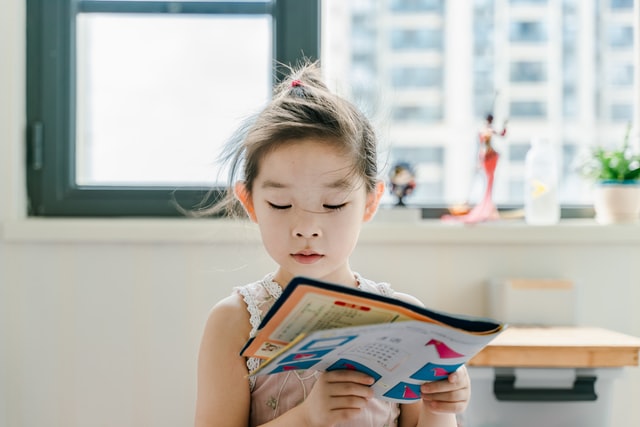
While we all develop our skills at a slightly different pace, there are some markers that we can use as a guide for ensuring that our children have the听听to thrive as young learners. Here, we鈥檝e outlined them for you:听
Babies听(up to 12 months)
Understand that speaking communicates meaning
Learns up to 50 words with their meanings
Responds when they are spoken to
Toddlers听(ages 1-2)
Pretend to read books
Can point to pictures and identify images in books
Can turn book pages
Can answer simple questions about stories (what is the farmer鈥檚 name?)
Preschoolers听(ages 3-4)
Knows how to care for books (i.e. doesn鈥檛 rip pages or color in them)
Can retell their favorite stories
Sit with a book independently
Is aware that letters make words
Begins to learn (or even masters) the alphabet
Kindergarten听(age 5)
Learns letters and their sounds
Can match spoken words to written words
Can provide a definition or explanation of words
Can predict what may happen in a story
Can retell a story with accuracy
Young elementary school students听(age 6-7)
Read longer books (i.e. chapter books) on their own
Can read aloud with increasing proficiency
Correctly use basic punctuation (i.e. period and question mark)
Can spell age-appropriate words correctly
Older elementary school students听(ages 8-10)
Can spell increasingly difficult vocabulary and use the words in their own writing
Can provide written summaries about what they鈥檝e read
Can answer questions about what they鈥檝e read with accuracy and increasing complexity
Understands different types of writing (i.e. poetry, biography, fiction, non-fiction, etc鈥�)
Can identify different parts of speech (i.e. noun, verb)
Middle and high schoolers听
Can read and write about more complex writing
Write essays and research papers
Cite their sources
Determine central ideas conveyed in texts听
Analyze point of view or perspective in text
Read increasingly challenging texts
What Are Some Top Books for Kids?
If you鈥檙e eager to encourage your kids to read, we鈥檝e got some great recommendations for you. It can be helpful to seek out award-winning books when building your home library. Check with your local kids鈥� librarian about the best books for your听.
Young readers听(age 4-7 years)
听by Simms Taback
听by Kevin Henkes
听by David Shannon
Middle readers听(ages 8-10 years)
听by William Steig
听by Madeleine L鈥橢ngle
听by Kate DiCamillo
Older readers听(ages 11-14 years)
听by Richard Peck
听by Lois Lowery
听by Christopher Paul Curtis
All ages
听by Jon J. Muth
听by Donald Hall
听by Dylan Thomas
These books can help you inspire a love for reading in your kids, but there are thousands of others. Be sure to visit your local library and area bookstores with your kids so they can explore their reading interests. In fact, you may find that you expand yours too!
More:
听听
Maria Jose is a Marketing Specialist and does Content Marketing at Porch. She is passionate about animals and her hobbies are reading, writing, traveling and music.